
BYOC Anywhere: 10 Principles for Secure Bring Your Own Cloud Deployment
Paul Paliychuk of Zep AI and Omnistrate co-founder Alok Nikhil lay out ten principles for secure Bring Your Own Cloud deployment: keep the data plane in the customer's account, connect without exposing it, swap static credentials for short-lived identity, and make vendor access revocable by design. They walk through the four levels of BYOC, what changes inside air-gapped environments, and why AI products hit the enterprise security bar far earlier in their life than previous generations of SaaS did. The episode closes with a live demo that turns a Helm chart into a BYOC offering with a self-service customer portal. If you are asking what BYOC means in practice, this is the checklist: the software runs in the customer's cloud account, the vendor operates it, and the customer keeps control of access.
Special Guests
Alok Nikhil
Co-founder and CTO of Omnistrate; previously at AWS, where he was the original technical author of Aurora Serverless.
Timestamps
00:00Why AI Products Need Flexible Cloud Deployment01:49How Zep AI Builds Context for AI Agents03:05Zep AI's Journey to Scalable BYOC Deployments04:51The 10 Principles of Secure BYOC07:16Zero Trust Between Vendors and Customers11:58How Zep AI Protects Sensitive Customer Data15:32Choosing Deployment Models for Different Enterprises17:21The Four Levels of BYOC Deployment20:47Managing Software in Air-Gapped Environments25:42Why AI Is Making BYOC an Early Requirement29:20Data and Tenant Isolation in Zep AI30:27Graphiti and Zep AI's Enterprise Graph Database32:18From Open Source to Enterprise-Grade Software35:37Live Demo: Turning a Helm Chart Into a BYOC Offering40:18Configuring the Customer's Cloud Deployment42:14How the Deployment Architecture Works45:29Building a Self-Service BYOC Portal48:17Using the Same Process for Other Software Products49:33Final TakeawaysAbout This Episode
- What is "BYOC Anywhere: 10 Principles for Secure Bring Your Own Cloud Deployment" about?
- Paul Paliychuk of Zep AI and Omnistrate co-founder Alok Nikhil lay out ten principles for secure Bring Your Own Cloud deployment: keep the data plane in the customer's account, connect without exposing it, swap static credentials for short-lived identity, and make vendor access revocable by design. They walk through the four levels of BYOC, what changes inside air-gapped environments, and why AI products hit the enterprise security bar far earlier in their life than previous generations of SaaS did. The episode closes with a live demo that turns a Helm chart into a BYOC offering with a self-service customer portal. If you are asking what BYOC means in practice, this is the checklist: the software runs in the customer's cloud account, the vendor operates it, and the customer keeps control of access.
- What topics does this episode cover?
- This episode is filed under Cloud Infrastructure, Security & Identity, AI Architecture on Agentic SaaS Talks.
- How long is this episode, and when was it published?
- "BYOC Anywhere: 10 Principles for Secure Bring Your Own Cloud Deployment" runs 50 min and was published on July 29, 2026.
- Who is featured in this episode?
- This episode features Alok Nikhil as a guest, in conversation with the Agentic SaaS Talks hosts.
- What are the key moments in this episode?
- Key moments include: Why AI Products Need Flexible Cloud Deployment; How Zep AI Builds Context for AI Agents; Zep AI's Journey to Scalable BYOC Deployments; The 10 Principles of Secure BYOC; Zero Trust Between Vendors and Customers; How Zep AI Protects Sensitive Customer Data; Choosing Deployment Models for Different Enterprises; The Four Levels of BYOC Deployment. The timestamps on this page jump to each one on YouTube.
Related Episodes
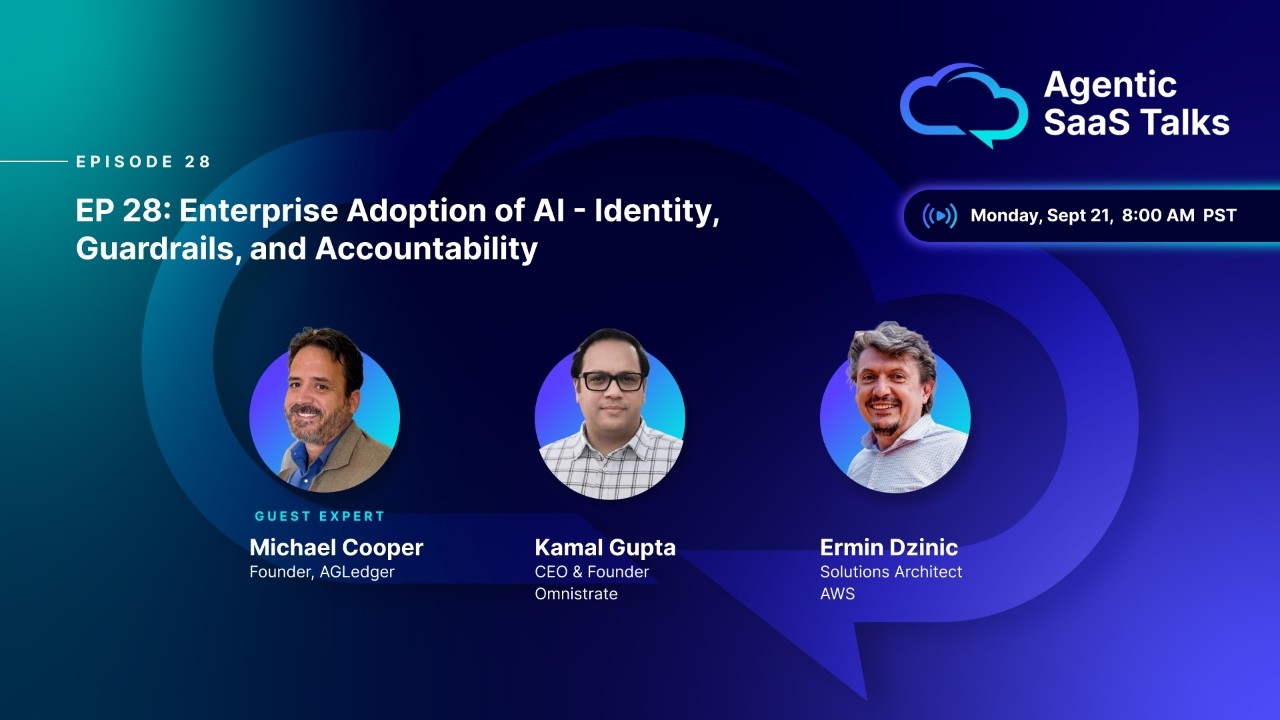
Episode 40: Enterprise Adoption of AI: Identity, Guardrails, and Accountability
Guest host Michael Cooper, founder of AGLedger.ai, returns with Ermin Dzinic and Kamal Gupta to look at what changes when AI agents start taking actions across enterprise systems. Bounded autonomy still rests on familiar principles: identity, least-privilege access, and audit trails that cannot be tampered with. The panel covers why enterprises may favor small, specialized agents, how to record an agent's intent before it acts, how to detect drift, and how structured handoffs between agents keep multi-agent work accountable and cut token costs.

Episode 31: Building BYOC for Fortune 500: The Real Story of Enterprise AI Deployment
Daniel Chalef, founder and CEO of Zep AI, walks through the brutal technical reality of deploying AI products into Fortune 500 environments, zero-trust architectures, Service Control Policies, no-egress VPCs, and broken image supply chains. He explains why pure SaaS AI products can't meet enterprise security bars and how Bring Your Own Cloud (BYOC) deployments actually get shipped into locked-down customer infrastructure. For vendors taking private AI into regulated customers, it shows what near air-gapped, no-egress environments demand.

Episode 18: Deploying Agentic Applications: From Multi-Tenant to "SaaS Anywhere"
In today's session, we're unpacking one of the most critical questions for modern AI companies: How do you actually deploy agentic applications? Join us as we break down how agentic systems will be deployed at scale, what changes SaaS companies must prepare for, and what the future of agent-driven architectures looks like.