
Selling SaaS on AWS Marketplace and Other Cloud Marketplaces, with Labra's CEO
Michael Cooper hosts Sridhar Adusumilli of Labra and Ibex Labs, Bill Tarr of the AWS SaaS Factory and Markus Kaiser of AWS to make the case that SaaS startups should list on AWS Marketplace early. Bill Tarr notes that more than one partner transacts over a billion dollars a year there, and that enterprise private pricing agreements let marketplace purchases count toward a customer's AWS spend commitment. Sridhar describes how a marketplace partner gets a first listing live when a deal is waiting on it, and Markus Kaiser covers enterprise buyer personas and land and expand. The panel then turns to co-sell through the ACE tool, the Foundational Technical Review, and newer marketplace features such as free trials, vendor insights and channel partner private offers. Listeners selling SaaS to enterprises learn what to set up on AWS and why.
Special Guests
Sridhar Adusumilli
CEO of Labra.io, helping SaaS companies succeed on cloud marketplaces.
Timestamps
00:00Welcome and the case for marketplace go-to-market02:00The ISV partner role and building a SaaS control plane03:30How the AWS SaaS Factory works with competency partners05:30What does an AWS startup solutions architect do?08:30SaaS competency partner versus marketplace partner10:30Why should startups list on AWS Marketplace first?14:00Private pricing agreements and spend commit burn-down18:00How a marketplace partner gets a first listing live fast22:30Enterprise buyer personas and the land and expand path29:30From first listing to co-sell: the marketplace maturity curve32:00What is ACE and how does AWS co-sell work?36:00Which partners do AWS field teams trust and recommend?41:30Is AWS co-sell really two-way? Deal ratios and FTR43:30Using AWS events to find product gaps before a sale45:30Free trials, vendor insights and channel partner private offersAbout This Episode
- What is "Selling SaaS on AWS Marketplace and Other Cloud Marketplaces, with Labra's CEO" about?
- Michael Cooper hosts Sridhar Adusumilli of Labra and Ibex Labs, Bill Tarr of the AWS SaaS Factory and Markus Kaiser of AWS to make the case that SaaS startups should list on AWS Marketplace early. Bill Tarr notes that more than one partner transacts over a billion dollars a year there, and that enterprise private pricing agreements let marketplace purchases count toward a customer's AWS spend commitment. Sridhar describes how a marketplace partner gets a first listing live when a deal is waiting on it, and Markus Kaiser covers enterprise buyer personas and land and expand. The panel then turns to co-sell through the ACE tool, the Foundational Technical Review, and newer marketplace features such as free trials, vendor insights and channel partner private offers. Listeners selling SaaS to enterprises learn what to set up on AWS and why.
- What topics does this episode cover?
- This episode is filed under Growth & Pricing, Cloud Infrastructure on Agentic SaaS Talks.
- How long is this episode, and when was it published?
- "Selling SaaS on AWS Marketplace and Other Cloud Marketplaces, with Labra's CEO" runs 49 min and was published on July 8, 2024.
- Who is featured in this episode?
- This episode features Sridhar Adusumilli as a guest, in conversation with the Agentic SaaS Talks hosts.
- What are the key moments in this episode?
- Key moments include: The ISV partner role and building a SaaS control plane; How the AWS SaaS Factory works with competency partners; What does an AWS startup solutions architect do?; SaaS competency partner versus marketplace partner; Why should startups list on AWS Marketplace first?; Private pricing agreements and spend commit burn-down; How a marketplace partner gets a first listing live fast; Enterprise buyer personas and the land and expand path. The timestamps on this page jump to each one on YouTube.
Related Episodes

Episode 37: BYOC Anywhere: 10 Principles for Secure Bring Your Own Cloud Deployment
Paul Paliychuk of Zep AI and Omnistrate co-founder Alok Nikhil lay out ten principles for secure Bring Your Own Cloud deployment: keep the data plane in the customer's account, connect without exposing it, swap static credentials for short-lived identity, and make vendor access revocable by design. They walk through the four levels of BYOC, what changes inside air-gapped environments, and why AI products hit the enterprise security bar far earlier in their life than previous generations of SaaS did. The episode closes with a live demo that turns a Helm chart into a BYOC offering with a self-service customer portal. If you are asking what BYOC means in practice, this is the checklist: the software runs in the customer's cloud account, the vendor operates it, and the customer keeps control of access.

Episode 36: Data Consistency for AI: How ScalarDB Unifies Databases and Speeds Migration
Joe McCunney, CEO of Scalar Labs, makes the case that reliable, consistent data across environments is the hidden bottleneck for enterprise AI, especially in large organizations juggling 300+ database types. He explains how ScalarDB acts as a database-agnostic binder that connects multiple data sources and treats them as a single database, and how the company's open source refactoring agent generates architecture docs and migration plans that cut enterprise design time by up to 85%.
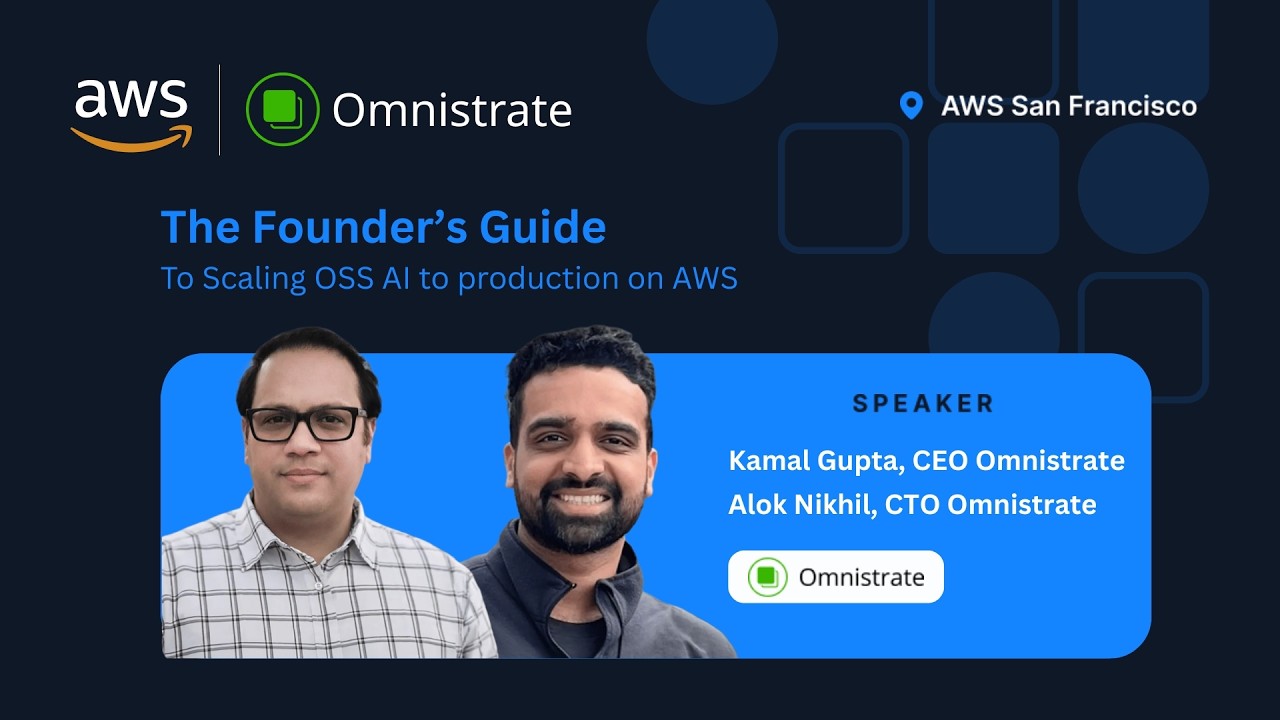
Episode 35: The Founder's Guide to Scaling Open Source AI Products to Production on AWS
Omnistrate co-founders Kamal Gupta and Alok Nikhil map the road from open source adoption to revenue: the four ingredients of monetization (project, enterprise features, distribution, go-to-market) and the three business models open to open source AI companies, product-led growth, AWS Marketplace co-sell, and enterprise sales. Alok closes with a live demo that turns vLLM into a managed inference service with a self-service customer portal, showing why distribution needs a control plane and why a Marketplace listing alone gets you discovered but not paid.