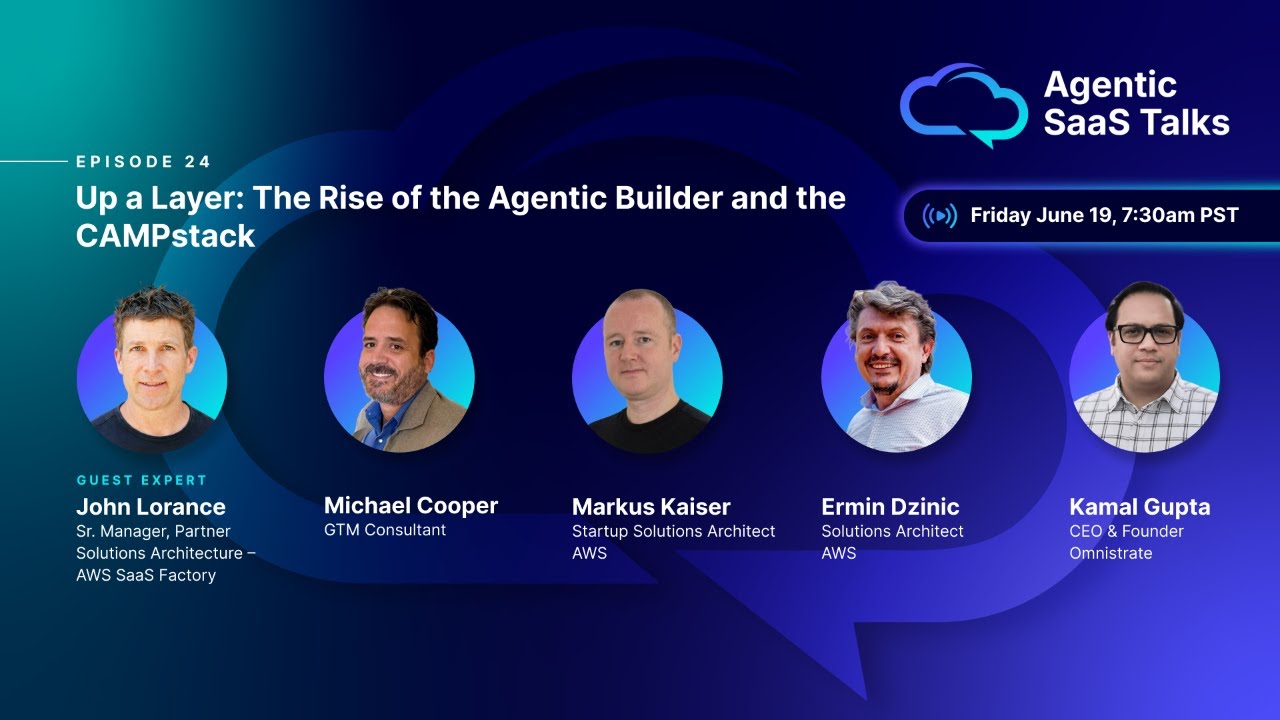
Up a Layer: The Rise of the Agentic Builder and the CAMPstack
The panel unpacks how builders are moving "up a layer", from writing every line of implementation to directing AI agents, composing managed services, and shipping faster on product judgment. They introduce the CAMP stack (Cloud, Agents, Managed services, Platforms) and dig into intent engineering, infrastructure control planes, the token economics of running agents 24/7, and why testing remains the hardest part of AI-generated code. Along the way they trace the shift from vibe coding to agentic engineering and ask whether AI will replace software engineers, junior ones in particular.
Special Guests
John Lorance
SaaS and cloud architecture leader; previously Sr. Manager, Partner Solutions Architecture at AWS SaaS Factory, helping partners build and scale SaaS on AWS.
Timestamps
00:00Introduction: Agentic SaaS Talks Episode 2401:19How AI Is Changing Software Engineering Roles02:16What Is the CAMP Stack? Cloud, Agents, Managed Services and Platforms03:53From Vibe Coding to Agentic Engineering04:37How AI Coding Tools Are Changing Developers, Founders and Product Teams07:02Developers as Shepherds of AI Agents08:35From Coder to Creator: The Rise of Intent Engineering10:21Why AI Agents Need Predictable APIs, CLIs and Infrastructure11:07Will AI Replace Junior Engineers or Product Managers?13:52Why Communication Skills Matter in AI-Native Software Development15:09Why Institutional Knowledge Still Matters in the AI Era18:26Hiring in the AI Era: PMs, Engineers and AI-Native Teams19:41AI as the Next Programming Language21:36Why AI Helps Teams Run More Experiments Faster23:55What Is an Agentic Builder?24:50Control Planes: The New Workflow for AI Coding Agents26:55How Omnistrate Fits Into the CAMP Stack27:34Infrastructure Control Planes for SaaS and AI-Native Companies28:35Spec-Driven Infrastructure: From Intent to Deployment30:55Why Managed Services Matter More in the Agentic AI Era31:03The Cost of Running AI Agents 24/733:17Managed Services, Ephemeral Compute and AI Build Workflows34:45Moving AI Builds From the Laptop to the Cloud36:37Why Testing Is the Hardest Part of AI-Generated Code38:01Test-Driven Development, AI Agents and Brownfield Codebases40:10AI Can Ship Bugs at Scale: Why Quality Agents Matter41:18How LLMs Add Chaos Engineering to Software Testing42:33Token Economics: The Hidden Cost of AI Software Development44:18Self-Hosted LLMs vs Managed AI Models45:35Context Windows, Local Models and Cost-Aware AI Development47:13Why Long AI-Generated Spec Docs Fail47:55Right-Sizing Specs for AI Coding Agents49:39Why Smaller Models Can Make Better AI Workflows50:24Horizontal vs Vertical Scaling for AI-Native Engineering Teams50:42Closing Thoughts: The Future of Agentic SaaS and Software EngineeringRelated Episodes

Episode 38: The Last Mile of AI-SDLC: When Agents Build What Customers Want
Productmind co-founders Steen Brahe and Alessio Nobile take on the last mile of the AI software development lifecycle: getting from a real customer conversation to shipped code without losing the original intent. They demo how a customer call becomes a feature request, then a living specification, then agent-ready tasks running against an existing codebase, with full lineage preserved from feedback to release. The panel also digs into how AI is redrawing product and engineering roles, what governance of human-agent collaboration looks like in the enterprise, and how the founders cleared 20+ bugs with parallel agents while building Productmind with Productmind. For product managers it doubles as a working example of AI for product management: customer feedback turned into specs that coding agents can act on.

Episode 36: Data Consistency for AI: How ScalarDB Unifies Databases and Speeds Migration
Joe McCunney, CEO of Scalar Labs, makes the case that reliable, consistent data across environments is the hidden bottleneck for enterprise AI, especially in large organizations juggling 300+ database types. He explains how ScalarDB acts as a database-agnostic binder that connects multiple data sources and treats them as a single database, and how the company's open source refactoring agent generates architecture docs and migration plans that cut enterprise design time by up to 85%.
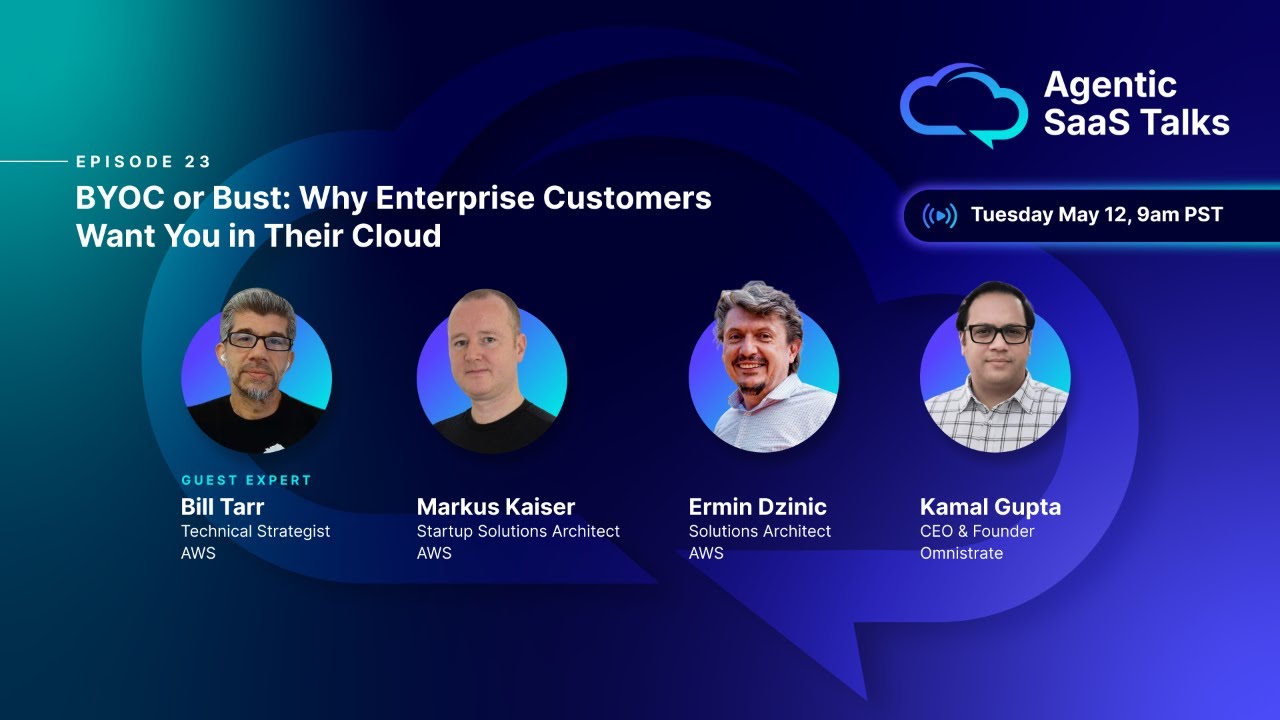
Episode 29: BYOC or Bust: Why Enterprise Customers Want You in Their Cloud
BYOC has shifted from a deployment option to a buying requirement. AWS solutions architects and Omnistrate's Kamal Gupta break down why enterprises now demand software in their own cloud, the security building blocks that make it work, and how agentic AI and data gravity are accelerating the move toward Bring Your Own Cloud.