
From Startup to Scale-up with Confluent
Michael Cooper, Kamal Gupta, Bill Tarr and Markus Kaiser talk with Confluent's Head of Global Partnerships about taking a SaaS company from first customers to scale. The guest recalls Confluent's early white-glove onboarding, when founders joined support calls, and notes that its cloud product is now over half of a billion-dollar run rate. The panel argues that unique customer installs create technical debt and can turn a SaaS company into a consultancy, that startups should keep a single version of the application plane, and that a control plane is more than a script. Kamal explains why Terraform and blue-green rollouts break down with many tenants, and the group debates building versus buying undifferentiated infrastructure. Founders past their first few customers can use it to decide what to automate first.
Timestamps
00:00Welcome, guest introduction and panel07:00Why do early customer installs end up unique?11:30What technical debt do SaaS startups take on?14:30How SaaS companies quietly become consulting companies16:00White-glove onboarding in Confluent's early days19:00When should a startup consolidate its application planes?22:00How AWS SaaS Anywhere handles customer-hosted deployments25:00Documentation, videos and LLMs for customer onboarding29:30Can a new user learn your product with only an AI IDE?32:30What should founders plan for in a control plane?38:00Data plane abstraction: tenant isolation, identity, data43:00Why start with a control plane and onboarding early?45:30Why Terraform and blue-green rollouts fail with tenants51:30Should you build or buy your control plane?55:30Build versus buy in practice: Chainguard and ConfluentAbout This Episode
- What is "From Startup to Scale-up with Confluent" about?
- Michael Cooper, Kamal Gupta, Bill Tarr and Markus Kaiser talk with Confluent's Head of Global Partnerships about taking a SaaS company from first customers to scale. The guest recalls Confluent's early white-glove onboarding, when founders joined support calls, and notes that its cloud product is now over half of a billion-dollar run rate. The panel argues that unique customer installs create technical debt and can turn a SaaS company into a consultancy, that startups should keep a single version of the application plane, and that a control plane is more than a script. Kamal explains why Terraform and blue-green rollouts break down with many tenants, and the group debates building versus buying undifferentiated infrastructure. Founders past their first few customers can use it to decide what to automate first.
- What topics does this episode cover?
- This episode is filed under Growth & Pricing, Founder Stories on Agentic SaaS Talks.
- How long is this episode, and when was it published?
- "From Startup to Scale-up with Confluent" runs 61 min and was published on July 22, 2024.
- What are the key moments in this episode?
- Key moments include: Why do early customer installs end up unique?; What technical debt do SaaS startups take on?; How SaaS companies quietly become consulting companies; White-glove onboarding in Confluent's early days; When should a startup consolidate its application planes?; How AWS SaaS Anywhere handles customer-hosted deployments; Documentation, videos and LLMs for customer onboarding; Can a new user learn your product with only an AI IDE?. The timestamps on this page jump to each one on YouTube.
Related Episodes

Episode 38: The Last Mile of AI-SDLC: When Agents Build What Customers Want
Productmind co-founders Steen Brahe and Alessio Nobile take on the last mile of the AI software development lifecycle: getting from a real customer conversation to shipped code without losing the original intent. They demo how a customer call becomes a feature request, then a living specification, then agent-ready tasks running against an existing codebase, with full lineage preserved from feedback to release. The panel also digs into how AI is redrawing product and engineering roles, what governance of human-agent collaboration looks like in the enterprise, and how the founders cleared 20+ bugs with parallel agents while building Productmind with Productmind. For product managers it doubles as a working example of AI for product management: customer feedback turned into specs that coding agents can act on.

Episode 33: Open Source Licensing and Survival in the Age of AI, with Joshua Drake
Joshua Drake, President and CTO of Command Prompt with nearly 30 years in the PostgreSQL community, lays out the risks AI creates for open source: extraction without attribution, model collapse, AI-generated security holes, and legal exposure from derivative work. He argues that proof of human contribution, signed origins, and governance with humans in the loop matter more than ever, and shows how commercial open source companies can adopt AI without losing community trust.
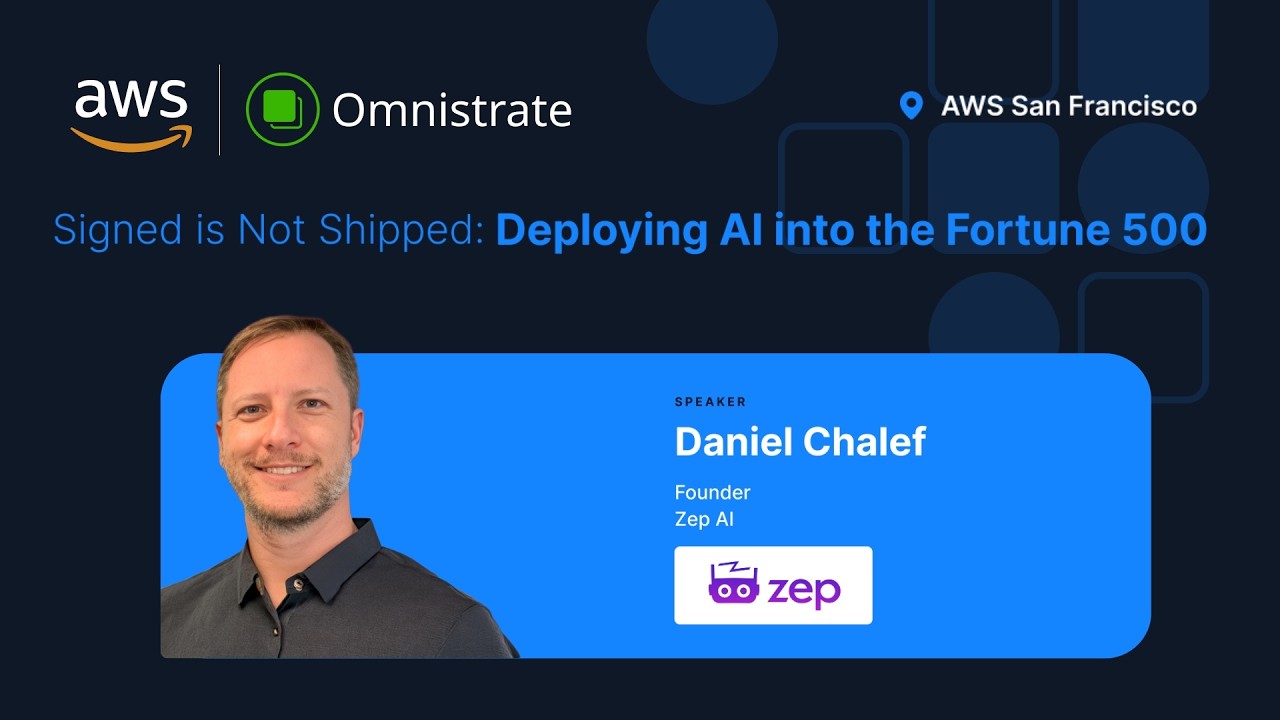
Episode 31: Building BYOC for Fortune 500: The Real Story of Enterprise AI Deployment
Daniel Chalef, founder and CEO of Zep AI, walks through the brutal technical reality of deploying AI products into Fortune 500 environments, zero-trust architectures, Service Control Policies, no-egress VPCs, and broken image supply chains. He explains why pure SaaS AI products can't meet enterprise security bars and how Bring Your Own Cloud (BYOC) deployments actually get shipped into locked-down customer infrastructure. For vendors taking private AI into regulated customers, it shows what near air-gapped, no-egress environments demand.